Try this First
If you're a psychiatrist, and someone comes to you with mild or moderate depression, and you reach straight for the prescription pad — I think you're not doing your job well. I think it's almost malpractice.
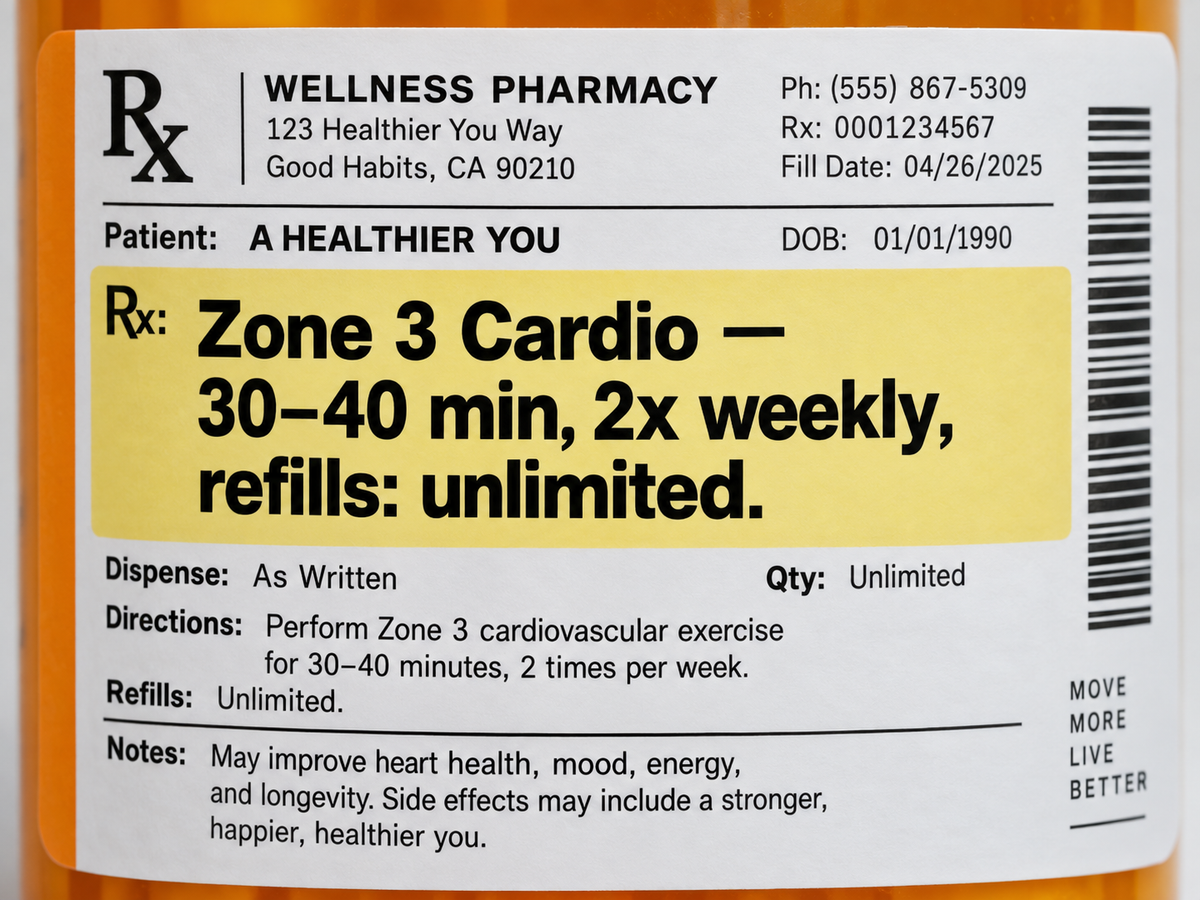
Tonight I was down in the dumps. Nothing dramatic — just that low, gray feeling of being sick of life, the kind that sits on your chest and makes everything look pointless. So I got on my bike and rode for an hour.
Nothing heroic. My heart rate sat around 125, 130 — zone three for me. My max is about 190, so I wasn't dying out there, but it was a real effort. Legs working, lungs working, sweat going, and room steamy.
And when I got off the bike, I felt great. Not "a little better." Great.
It's crazy how that works. You genuinely cannot fathom how different you can feel until you actually do it. When you're down, your brain tells you it won't help, that you're too tired, that there's no point. Your brain is lying. An hour later you're a different person, and you can't believe you almost talked yourself out of it.
Which brings me to something I believe pretty strongly. If you're a psychiatrist, and someone comes to you with mild or moderate depression, and you reach straight for the prescription pad — I think you're not doing your job well. I think it's almost malpractice.
Here's what I'd want instead. Tell the patient: I'm willing to prescribe antidepressants. I'm not against it, and if we need them, we'll use them. But let's try something first.
Then actually enforce it. Aerobic activity, at least twice a week — more if they want — heart rate in zone three or higher, thirty to forty minutes a session. Give it two weeks. And make them record it, through a watch or a fitness tracker, so there's real data and not just "yeah, I went for a walk." Not pumping you full of drugs before we've even tried the thing that works.
If they push back, that's the line: if this helps, this is the right way to help you.
Now — the catch, and it's a real one. The trick is making yourself actually do it. The thing works almost every single time, but it asks the most from you exactly when you have the least to give. That's the whole problem with depression — the cure is hardest to reach at the bottom.
That's not an argument against it. That's the argument for structure. For a doctor who enforces it, a schedule you commit to, a log you have to fill in. You build the scaffolding precisely because willpower fails right when you need it most. You don't leave it up to how you feel in the moment, because in the moment, you'll talk yourself out of the very thing that saves you.
I'm not a doctor. This is one guy's conviction, built on getting on the bike one more time when I didn't want to. But I've felt the difference too many times to believe it's a fluke. Try this first.